

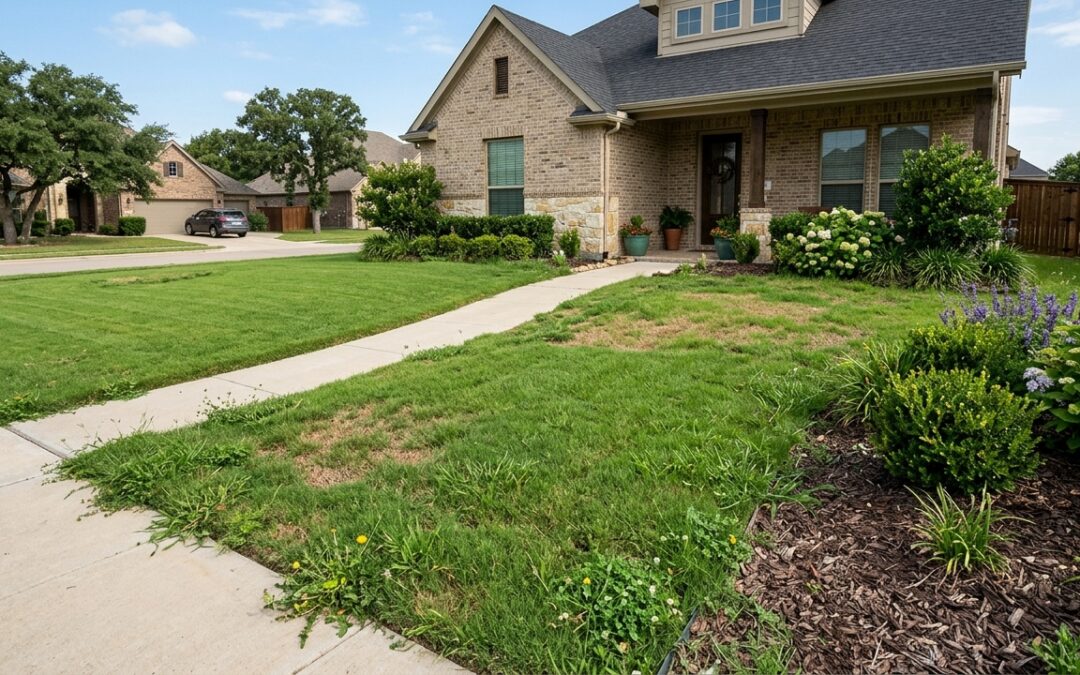
A lawn does not need to be completely damaged to make an outdoor space look neglected. Sometimes, the difference between a tidy, inviting yard and one that feels unfinished comes down to a few small details. Uneven grass, thin patches near walkways, messy borders, standing water, and weeds growing between healthy blades can gradually affect the appearance of the entire property.
For homeowners in Little Elm, maintaining an attractive lawn means paying attention to more than grass height. Changing weather, foot traffic, soil conditions, and everyday outdoor activities can all influence how a yard looks and grows. A lawn may appear healthy from the street while developing problems around trees, fences, driveways, or other areas that receive less attention.
Recognizing these issues early makes lawn maintenance more manageable. Rather than waiting until a small patch becomes a large bare area, homeowners can identify the underlying cause and choose a suitable solution. Consistent lawn service little elm homeowners can rely on should focus on these details as well as routine mowing, helping outdoor spaces look balanced, cared for, and appropriate for everyday use.
Why Small Lawn Problems Often Go Unnoticed
Most homeowners notice obvious changes, such as a large brown patch or grass that has grown excessively tall. Smaller issues are easier to overlook because they develop gradually. A slightly uneven edge may not seem important after one mowing session, but the same problem can make the entire yard appear untidy when repeated along a driveway or sidewalk.
Grass also responds differently to sunlight, moisture, soil conditions, and traffic. The area beneath a mature tree may thin out while an open section remains dense and green. A narrow strip beside a fence might receive less water than the rest of the lawn, while a frequently used route to the backyard can gradually lose its grass cover.
These differences matter because a lawn is part of a larger outdoor setting. Its appearance influences how planting beds, patios, fences, and walkways fit together. Addressing isolated problems can therefore improve the overall impression of a property without requiring a complete landscape renovation.
1. Uneven Grass Height and Inconsistent Mowing
Grass that grows at different rates can create an irregular appearance, even when it is generally healthy. Some sections may look thick and freshly cut, while others appear shaggy or noticeably shorter. This often happens when mowing is inconsistent, equipment is poorly adjusted, or the lawn contains areas with different growing conditions.
Cutting grass too short can be particularly damaging. Removing too much of the leaf blade at once places stress on the turf and can leave soil exposed to stronger sunlight. The result may be a pale, uneven lawn that struggles to recover during hot weather.
A better approach is to maintain an appropriate cutting height for the grass variety and avoid removing more than one-third of its height in a single mowing session. When grass becomes excessively long, gradually bringing it back to the desired height is generally safer than attempting to cut everything at once.
Homeowners seeking lawn service little elm properties need should consider consistency as an important part of routine maintenance. Regular mowing, sharp blades, and attention to changing growth rates help create a more uniform finish. The goal is not simply to make grass shorter but to preserve its health while keeping the yard visually balanced.
2. Thin Patches Along Walkways and Fences
Bare or thinning grass often develops in places where people repeatedly walk, where pets follow the same route, or where the soil has become compacted. Narrow strips beside fences and driveways can also struggle because of limited sunlight, reflected heat, or inconsistent watering.
These areas deserve individual attention rather than a quick application of fertilizer. If the soil is compacted, adding nutrients alone may not solve the problem because roots still struggle to access air and water. Similarly, grass planted in deep shade may remain thin even when mowing and watering are otherwise appropriate.
Begin by examining the affected area. Check whether the soil feels unusually hard, whether water runs off instead of soaking in, and whether nearby structures block sunlight for most of the day. Consider whether the grass is being worn down by repeated foot traffic.
If a particular route is used every day, a stepping-stone path or another suitable walking surface may be more practical than repeatedly trying to grow grass in the same location. Where growing conditions are suitable, repairing the soil and choosing compatible turf can help restore coverage.
The most effective solution depends on the cause. Treating the reason for thinning first gives replacement grass a better chance of establishing itself and reduces the likelihood of repeating the same repair.
3. Messy Edges Around Driveways and Garden Beds
A lawn can be healthy and neatly mowed yet still look unfinished because its edges have become difficult to distinguish. Grass spreading into flower beds, weeds appearing along pavement, and irregular borders can make an otherwise organized yard look disjointed.
Clean edges create visual separation between different outdoor areas. They help a driveway look defined, make planting beds easier to appreciate, and give the lawn a more deliberate shape. This is especially useful in smaller yards, where the relationship between each surface is immediately noticeable.
Edge maintenance does not require elaborate landscaping. A consistent line along sidewalks and driveways, combined with clearly defined planting beds, can create a substantial improvement. However, aggressive trimming should be avoided because damaged grass near hard surfaces may struggle to recover.
Homeowners can also reconsider the shape of their lawn borders. Curves should have a clear purpose, while straight edges can work well beside geometric patios and walkways. Avoiding numerous narrow corners makes mowing easier and reduces places where grass is difficult to maintain.
A thoughtful lawn service little elm maintenance plan should account for edging as a separate task rather than treating it as an optional finishing touch. When the grass, pavement, and garden beds have clear boundaries, the whole property appears more orderly.
4. Brown Spots That Keep Returning
Brown patches are among the most frustrating lawn problems because several different conditions can produce similar symptoms. Affected grass may be struggling with drought, excessive moisture, disease, insect activity, mowing damage, or unsuitable growing conditions.
The location and behavior of a patch can offer useful clues. Brown grass near a driveway may experience reflected heat or restricted moisture. Damage in a low area that remains wet after rainfall may indicate drainage difficulties. Patches that expand despite reasonable watering could have another cause that needs closer inspection.
Look beyond the surface
Before applying fertilizer or a lawn treatment, examine the affected grass and surrounding soil. Check whether the area is dry or consistently damp, whether the grass pulls away easily from the ground, and whether the damage follows a recognizable pattern. Compare the affected section with nearby healthy turf.
Avoid assuming that every brown patch needs more water. Additional irrigation may help drought-stressed grass but can worsen certain moisture-related problems. Likewise, fertilizer will not correct poor drainage or automatically eliminate insect damage.
If the cause remains unclear or the damaged area continues to spread, seek advice from a qualified lawn professional or local horticultural extension service. Correct identification helps prevent unnecessary treatments and protects the surrounding grass.
5. Poor Drainage and Small Depressions
Low spots in a lawn can appear insignificant until rainfall reveals the problem. Water may collect near a patio, along a fence, or in a shallow depression in the middle of the yard. Once the surface dries, the same area may look muddy, thin, or uneven compared with the surrounding grass.
Standing water can interfere with root health, while repeated foot traffic across wet ground can compact the soil further. Water that flows toward a building or remains close to outdoor structures may also create broader drainage concerns.
The first step is to observe where the water travels. Check the lawn during or shortly after rainfall and note whether runoff comes from a roof downspout, paved surface, or neighboring section of the yard. A depression within the turf may need a different solution from water entering the property from elsewhere.
Small surface irregularities can sometimes be corrected with suitable topdressing methods, but substantial depressions or drainage problems may require professional assessment. Soil should not simply be added in thick layers over established grass, because excessive covering can smother it.
Drainage improvements should preserve appropriate slopes and direct water away from structures without sending it into neighboring properties. Addressing the source of the problem is more reliable than repeatedly repairing grass in an area that continues to collect water.
6. Weeds Growing Between Healthy Grass
A few weeds can change the appearance of an otherwise attractive lawn. Broadleaf plants, grassy weeds, and unwanted growth along borders interrupt the consistent texture of turf and can make maintenance seem incomplete.
Weeds often gain an advantage where grass is thin, mowing is inappropriate, or soil conditions do not support vigorous turf growth. Simply removing visible weeds may improve the immediate appearance, but the same areas can become vulnerable to new growth if the underlying conditions remain unchanged.
Start by identifying the type of weed and determining whether it is scattered throughout the lawn or concentrated in specific areas. Hand removal may be practical for a small number of weeds, particularly when their roots can be removed without disturbing too much surrounding grass.
Herbicides should be selected carefully for the particular weed and turf variety. Always follow the product label, including application rates and precautions. Applying an unsuitable product can damage desirable grass, while unnecessary treatments add expense without addressing the original problem.
Dense, appropriately maintained turf can help reduce opportunities for weeds to establish. Consistent mowing, suitable irrigation, and correcting thin patches create better growing conditions for grass without relying exclusively on chemical control.
7. Practical Maintenance Habits That Prevent Bigger Problems
Small lawn defects are easier to manage when homeowners follow a consistent inspection routine. A quick look at the yard after mowing or rainfall can reveal changes that might otherwise go unnoticed for weeks.
Three simple habits can help keep routine maintenance focused on the areas that need attention most.
Inspect the lawn from different viewpoints. Looking at the property from the street, patio, and back door can reveal uneven sections, irregular borders, and areas that appear disconnected from the rest of the landscape. Walk the perimeter to check narrow strips that are easy to miss during mowing.
Adjust maintenance to actual conditions. Grass growth changes with temperature, rainfall, sunlight, and season. Water according to the lawn’s needs and local restrictions, and avoid applying fertilizer automatically when grass is dormant or under significant stress. Soil testing can help determine whether nutrients are actually needed.
Repair the cause, not just the appearance. Before replacing grass, investigate compacted soil, drainage, shade, repeated traffic, or possible pest damage. Correcting these conditions makes a repair more likely to last and can prevent the same problem from returning.
These habits are particularly useful when lawn service little elm homeowners arrange is intended to keep the property consistently presentable rather than simply provide an occasional cleanup.
Matching Common Lawn Problems With Practical Solutions
Different symptoms require different responses. The following table offers a starting point for identifying the next step without assuming that every lawn needs the same treatment.
| Lawn problem | Possible cause | Practical first step |
|---|---|---|
| Uneven grass height | Inconsistent mowing or varied growth | Adjust cutting height and mowing frequency |
| Thin strips beside fences | Shade, compacted soil, or limited water | Inspect sunlight, soil condition, and irrigation |
| Ragged lawn borders | Grass spreading into adjacent surfaces | Redefine edges and maintain them regularly |
| Recurring brown patches | Drought, disease, insects, or other stress | Examine the pattern and check soil moisture |
| Water collecting in depressions | Poor grading or restricted drainage | Observe runoff and assess the low area |
| Weeds scattered through turf | Thin grass or favorable weed conditions | Identify weeds and improve turf health |
| Grass wearing away along a path | Repeated foot traffic | Create a suitable route or strengthen the affected area |
These recommendations are starting points rather than guaranteed diagnoses. If a problem persists, determining the underlying cause is more useful than repeatedly applying treatments that may not suit the situation.
Making Lawn Improvements Without Redesigning the Yard
Not every lawn needs a major renovation to look better. In many cases, a few carefully chosen improvements can make the outdoor space feel more organized. Repairing one visible bare patch, defining the edge of a planting bed, or correcting an inconsistent mowing pattern may produce a noticeable difference.
Prioritize problems according to their effect on the property. Drainage concerns and widespread grass damage deserve attention before purely cosmetic details. Once the underlying conditions are stable, homeowners can focus on edging, trimming, and improving the appearance of smaller sections.
Budget and time also matter. A simple maintenance schedule may be enough for a lawn with minor issues, while a property with persistent drainage problems, extensive thinning, or recurring pest damage may need a more detailed plan. Breaking the work into manageable stages helps avoid unnecessary spending and makes progress easier to assess.
For properties that need regular attention, lawn service little elm residents arrange should reflect the actual condition of the yard, the grass variety, and the household’s outdoor routines. A suitable plan can combine routine mowing with periodic inspections and targeted repairs rather than treating every visit as an identical task.
The most important consideration is consistency. Small improvements are more likely to last when homeowners monitor the lawn, respond to changing conditions, and avoid maintenance practices that create additional stress.
Frequently Asked Questions
1. What is the most common reason a lawn looks uneven?
Uneven mowing, different growing conditions, compacted soil, and inconsistent watering can all contribute. Examine the affected sections before changing the mowing schedule or applying products, because similar appearances can have different causes.
2. Can small brown patches recover without replacing the grass?
Yes, some patches recover when the underlying stress is corrected and the grass remains alive. However, areas with dead turf, serious root damage, or persistent disease may require additional treatment or reseeding, depending on the grass variety and season.
3. How often should a residential lawn be mowed?
Mowing frequency depends on grass type, weather, and growth rate. Instead of following a rigid weekly schedule, mow when needed and avoid removing more than one-third of the grass blade in a single session.
4. Why does water collect in certain parts of a yard?
Low spots, compacted soil, blocked drainage routes, and runoff from nearby surfaces can cause pooling. Observe the water’s source and direction before attempting to fill depressions or change the landscape’s grading.
5. When should a homeowner seek professional lawn care help?
Professional assistance can be useful when brown patches continue spreading, drainage problems persist, grass repeatedly fails to establish, or the cause of damage is unclear. A proper assessment helps match the solution to the actual problem.
Conclusion
A well-maintained lawn is often the result of many small decisions rather than one major improvement. Uneven mowing, thinning grass, messy borders, standing water, and scattered weeds may seem minor individually, but together they can change the way an entire property looks and feels.
The best approach is to notice these changes early, identify their likely causes, and prioritize repairs that support lasting grass health. Consistent mowing, appropriate watering, careful edging, and attention to soil and drainage can make outdoor spaces easier to maintain throughout the year.
With a practical maintenance routine and timely attention to developing problems, homeowners can protect the appearance of their yards without automatically committing to a complete redesign. Small, well-planned improvements can help a lawn remain neat, functional, and welcoming through changing seasons.