

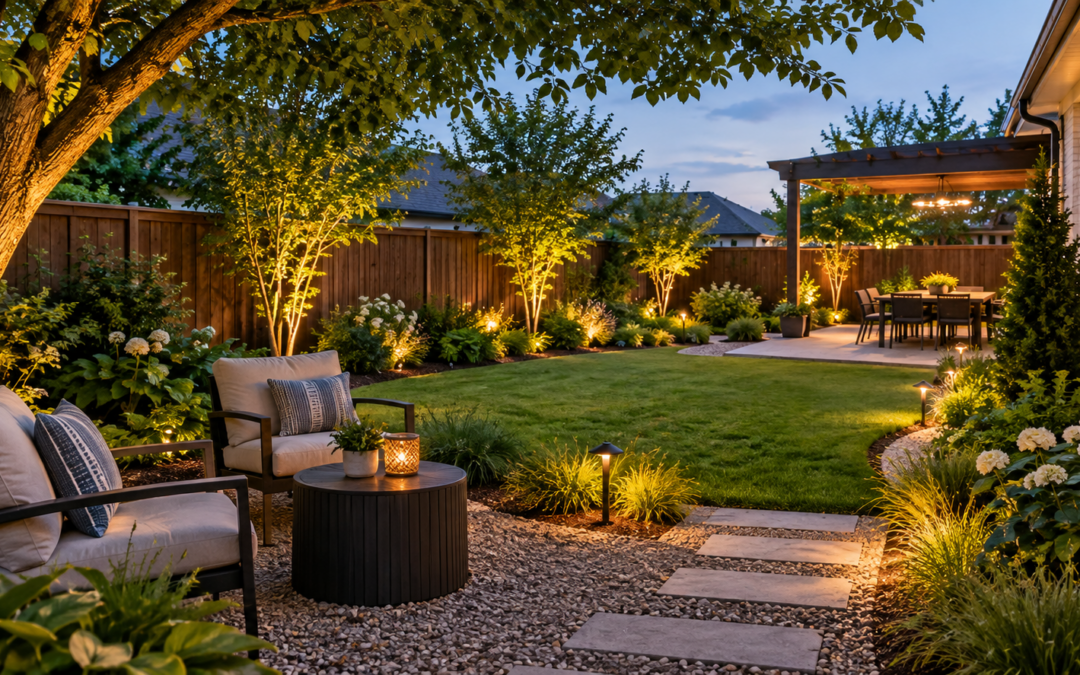
A backyard can have plenty of grass and still feel as though something is missing. The lawn may be healthy, the fence may be in good condition, and the patio may offer enough room for a few chairs, yet certain corners remain unused. Narrow strips beside the house, shaded areas beneath mature trees, awkward spaces behind outdoor equipment, and empty sections near the fence often become overlooked parts of the property.
These spaces do not necessarily need expensive renovations or elaborate features. With thoughtful planning, an unused corner can become a quiet reading area, a compact garden, a shaded seating spot, or a practical transition between different parts of the yard. The key is to understand why the space is being ignored and what would make it more useful.
For homeowners considering landscape southlake improvements, the best starting point is often a closer look at the backyard they already have. Instead of adding more grass or immediately purchasing decorative features, consider how sunlight, drainage, privacy, access, and everyday habits influence the way the property is used. Small, purposeful changes can turn forgotten areas into functional parts of a more cohesive outdoor environment.
Start by Understanding Why a Space Goes Unused
Before choosing plants, furniture, or paving materials, observe the areas that receive little attention. A corner may be empty because it is difficult to reach, too exposed to the afternoon sun, consistently damp, or simply disconnected from the main seating area. Each condition suggests a different solution.
For example, a narrow section behind the garage might be suitable for organized storage, while a sheltered corner near the back door could support a small seating area. An area beneath a mature tree may be better suited to a shade-tolerant planting arrangement than a conventional lawn that repeatedly struggles to grow.
Pay attention to how people move through the backyard. If everyone naturally gathers near the kitchen door, a seating area placed at the far end of the property may remain unused unless there is a clear reason to visit it. Similarly, a garden bed positioned across a frequently used route can create unnecessary obstacles.
A practical landscape southlake plan should respond to these everyday patterns rather than treating every empty patch as a design problem. The goal is to make the property work better for the people who use it, while preserving the features that already contribute to its character.
Turn Empty Corners Into Defined Outdoor Zones
One of the simplest ways to improve an overlooked backyard is to give each usable area a clear purpose. Outdoor spaces often feel incomplete when they contain disconnected features without an obvious relationship to one another.
A corner can become a small retreat with two comfortable chairs and a side table. A wider area near a garden bed might accommodate a bench, while a section close to the house could provide a convenient place for container plants. The appropriate choice depends on the available dimensions, the amount of shade, and how frequently the area will be used.
Choose a purpose before choosing features
Start with one main activity rather than attempting to fit several functions into a limited space. A reading corner needs comfortable seating and perhaps a small surface for books or drinks. A gardening area needs room to reach containers, handle tools, and water plants without stepping over obstacles.
The same principle applies to larger yards. Instead of leaving the entire property as one uninterrupted expanse of grass, homeowners can establish distinct zones for dining, relaxing, gardening, or children’s activities. These areas do not need walls or permanent structures to feel separate. Changes in paving, planting, furniture placement, or the direction of a walkway can provide enough visual definition.
Keep the scale appropriate. Oversized furniture can make a modest corner difficult to navigate, while tiny decorative features may disappear in a broad, open yard. Measure the available space and consider how much room is needed to move around each feature comfortably.
Make Better Use of Areas Beneath Trees
Mature trees often provide some of the most attractive features in a backyard, but the ground beneath them can be challenging. Dense shade, competition for moisture, and established roots may prevent ordinary turf from growing evenly. Repeated attempts to repair bare patches can become frustrating when the growing conditions remain unchanged.
Rather than treating every thin area as a lawn problem, consider whether the space would work better as a planted understory or a simple shaded retreat. Suitable shade-tolerant plants, where appropriate for the local conditions, can soften the transition between the trunk and the surrounding lawn. A carefully positioned bench can also make the tree a destination instead of an obstacle.
Root protection is essential. Avoid piling soil against the trunk, cutting major roots to accommodate paving, or installing heavy features without considering the tree’s health. A thick layer of mulch can help conserve moisture, but it should be kept away from direct contact with the trunk. The required mulch depth depends on the material and existing soil conditions.
Where roots are close to the surface, use flexible planting arrangements and avoid extensive excavation. If the tree is mature or appears unhealthy, a qualified arborist can help determine which changes are appropriate.
Create a Garden Where Grass Struggles
Not every part of a backyard is suitable for turf. Narrow strips, deep shade, awkward slopes, and areas around established trees may demand frequent repairs without producing a satisfying result. Converting selected sections into garden beds can provide a more practical alternative.
A planting area introduces variation in height, texture, and seasonal interest. It can also create a visual transition between a fence and the main lawn, making the yard feel more intentionally designed. However, plant selection should be based on actual growing conditions rather than appearance alone.
Consider sunlight throughout the day, the soil’s drainage, available irrigation, and the amount of maintenance the household can realistically provide. Plants that require consistently moist soil may struggle in a hot, exposed location, while sun-loving varieties may become weak in deep shade.
For a landscape southlake project, locally suitable plants and materials are worth considering because North Texas conditions can include intense summer heat, periods of limited rainfall, and occasional severe weather. Native and well-adapted plants can be useful choices when their light, soil, and water requirements match the site.
A small planting bed can be more effective than a complicated arrangement with numerous species. Repeating a few compatible plants often creates a calmer appearance and makes watering, pruning, and replacing individual plants easier.
Add a Purpose to Narrow and Awkward Spaces
The area between a house and its fence is easy to overlook because it may not seem wide enough for conventional outdoor furniture. Yet these narrow sections can serve several useful functions when access and drainage are considered carefully.
Some may work as service paths that make exterior maintenance easier. Others can accommodate a restrained planting strip or a small collection of containers. Where equipment needs regular access, a durable and easy-to-clean surface may be more practical than delicate planting.
Avoid filling narrow spaces simply because they are empty. A dense arrangement of shrubs, pots, and decorative objects can make an already restricted passage difficult to navigate. Leave sufficient clearance around utility equipment, gates, air-conditioning units, and drainage outlets. Any changes should also respect access requirements and local restrictions.
Three practical approaches can help homeowners decide what belongs in these less prominent areas.
- Create a useful access route. Where people need to reach a gate, utility point, or storage area, a stable path can improve everyday convenience and prevent repeated foot traffic from damaging nearby grass.
- Use vertical interest selectively. Wall-mounted planters or suitable climbing plants can introduce greenery where ground space is limited, provided the structure, sunlight, and plant growth habits support the arrangement.
- Keep service areas organized. Screening or neatly arranged storage may help an exposed section look more intentional, but access, ventilation, drainage, and equipment clearances must remain unobstructed.
The most successful solution is often the one that makes the area easier to use without introducing additional maintenance demands.
Improve Privacy Without Closing Off the Backyard
Some unused corners feel uncomfortable because they are too exposed to neighboring windows, nearby seating areas, or direct views from the house. A homeowner may avoid using a perfectly suitable part of the yard simply because it does not feel private enough.
Privacy can be improved through the placement of planting beds, carefully positioned seating, or suitable screening. The objective is to interrupt unwanted sightlines while preserving airflow, daylight, and the open character of the property.
For instance, a small seating area beside a fence may feel more welcoming when supported by a few appropriately spaced shrubs. In a larger yard, planting at the edge of a gathering area can create a sense of enclosure without dividing the entire property into separate compartments.
Before installing a tall screen or dense row of trees, consider how the feature will look from inside the house and how much room it will need as it matures. Large plants can eventually interfere with walkways, neighboring spaces, or overhead utilities if their mature dimensions are ignored.
A balanced landscape southlake design can use privacy features as part of the overall composition rather than adding them as isolated barriers. Repeating materials or plant varieties from nearby beds helps a secluded corner feel connected to the rest of the yard.
Use Lighting to Make Forgotten Areas More Inviting
An outdoor corner that works during the day may become difficult to use after sunset. Poor visibility around steps, narrow paths, or changes in ground level can also discourage people from moving beyond the main patio.
Thoughtful lighting can make selected areas more accessible and give the backyard a more complete appearance in the evening. Low-level path lights may help define a route, while carefully positioned fixtures can highlight a seating area or an attractive tree.
The lighting plan should follow the intended use of each space. A path requires clear visibility, whereas a quiet seating corner may benefit from softer illumination. Avoid placing bright fixtures where they shine directly into neighboring windows or create glare from the main patio.
Use outdoor-rated equipment and follow the manufacturer’s installation requirements. Electrical work should be handled by a qualified professional when necessary, especially where wiring, moisture exposure, or permanent fixtures are involved.
Lighting should also be restrained. Illuminating every tree, fence panel, and planting bed can make the yard feel visually crowded. A few well-positioned fixtures are often sufficient to guide movement and draw attention to the areas that matter.
Plan for Water, Weather, and Long-Term Maintenance
A forgotten area may be unused because it becomes muddy after rainfall, dries out quickly in summer, or requires more upkeep than the rest of the property. These conditions should be addressed before adding furniture, decorative gravel, or new plants.
Observe the area after rain to understand where water collects and how it moves. Check whether a downspout discharges nearby or whether runoff travels from a paved surface into the corner. Avoid covering a drainage problem with decorative materials, because the underlying issue may remain and eventually damage the new installation.
Similarly, choose surfaces that suit the intended activity and local weather. Pavers may work well for a small seating area, while gravel may suit a low-traffic garden path if it can be contained and maintained. Permeable materials can be useful in appropriate applications, but their effectiveness depends on soil conditions, installation, and the amount of runoff they receive.
The table below compares several options for giving an underused backyard space a practical new role.
Matching Forgotten Spaces With Suitable Improvements
| Underused area | Potential purpose | Important consideration |
|---|---|---|
| Shaded corner beneath a tree | Bench or shade-tolerant planting bed | Protect established roots and avoid piling soil against the trunk |
| Narrow strip beside the house | Access path or compact planting area | Maintain drainage and clearance around equipment |
| Empty corner near a fence | Private seating nook | Consider mature plant sizes and sightlines |
| Repeatedly bare patch of grass | Garden bed or suitable alternative ground cover | Identify shade, compaction, and moisture conditions first |
| Low area that collects water | Corrected drainage or moisture-tolerant planting where suitable | Determine the source and direction of runoff |
| Open section beyond the patio | Dining, relaxation, or activity zone | Provide a clear route and appropriate scale for furnishings |
These ideas are starting points, not fixed prescriptions. The right choice depends on the dimensions, conditions, budget, and intended use of the specific space.
Bring the Entire Backyard Together With a Simple Plan
Individual improvements can still look disconnected if they are designed independently. A new seating nook may feel out of place beside a formal patio, while an elaborate garden bed may compete with existing trees and planting areas.
A simple plan helps establish visual consistency. Choose a limited palette of materials, repeat a few plant varieties where conditions allow, and use paths or borders to connect different zones. The goal is not to make every part of the yard identical, but to create a recognizable relationship between its features.
Three planning habits can help maintain that balance.
- Set priorities before purchasing materials. Decide which area will provide the greatest practical benefit and begin there. Completing one well-planned improvement is usually more useful than starting several unrelated projects.
- Consider the mature landscape. Allow for the future size of plants, the spread of tree canopies, and the space required for people to move comfortably. A design that fits only on installation day may become difficult to maintain later.
- Plan upkeep alongside installation. Account for watering, pruning, surface cleaning, seasonal debris, and access for routine maintenance. Features that look appealing but cannot be maintained consistently may quickly become neglected again.
For larger properties, landscape southlake planning can also benefit from dividing the work into stages. A homeowner might first address drainage and access, then establish planting beds, and finally add seating or lighting. This approach allows each decision to build on the previous work and makes it easier to adjust the plan as the yard’s needs become clearer.
Frequently Asked Questions
1. What is the easiest way to improve an unused backyard corner?
Begin by identifying why it is unused. If the area is comfortable and accessible, a bench or small seating arrangement may be sufficient. If it receives too much shade or has poor soil conditions, a suitable planting bed or practical pathway may be a better choice.
2. Should every bare area of a backyard be converted into a garden?
No. Some areas are better suited to turf, walking surfaces, storage, or open space. The decision should depend on sunlight, drainage, soil conditions, maintenance needs, and how the household uses the yard.
3. How can homeowners make a small backyard feel more functional?
Use clearly defined zones, appropriately scaled furniture, and simple routes between important areas. Avoid overcrowding the yard with too many features, and prioritize the activities that matter most to the household.
4. Which plants work best in Southlake backyards?
Suitable plants depend on the amount of sunlight, soil drainage, irrigation, and available space. Native and regionally adapted varieties may be useful, but individual plants should be selected according to their specific growing requirements and mature dimensions.
5. When is professional landscape planning worthwhile?
Professional help may be valuable when a project involves persistent drainage problems, significant grading, mature trees, complex lighting, or several outdoor zones that need to work together. Expert planning can help identify constraints before installation begins.
Conclusion
Forgotten backyard spaces often offer more potential than their current appearance suggests. An empty corner can become a quiet retreat, a difficult strip can provide better access, and a patch where grass repeatedly struggles can support a more suitable planting arrangement.
The most effective improvements begin with observation rather than immediate purchases. Understanding sunlight, water movement, privacy, access, and daily routines helps homeowners choose features that solve real problems. From there, consistent materials, appropriately selected plants, and manageable maintenance requirements can bring the different parts of the property together.
A successful landscape does not need to fill every available space. It needs to make each important area feel intentional, useful, and connected to its surroundings. With a thoughtful plan, homeowners can create a backyard that offers more than a stretch of green grass and better supports the way they want to live outdoors.