

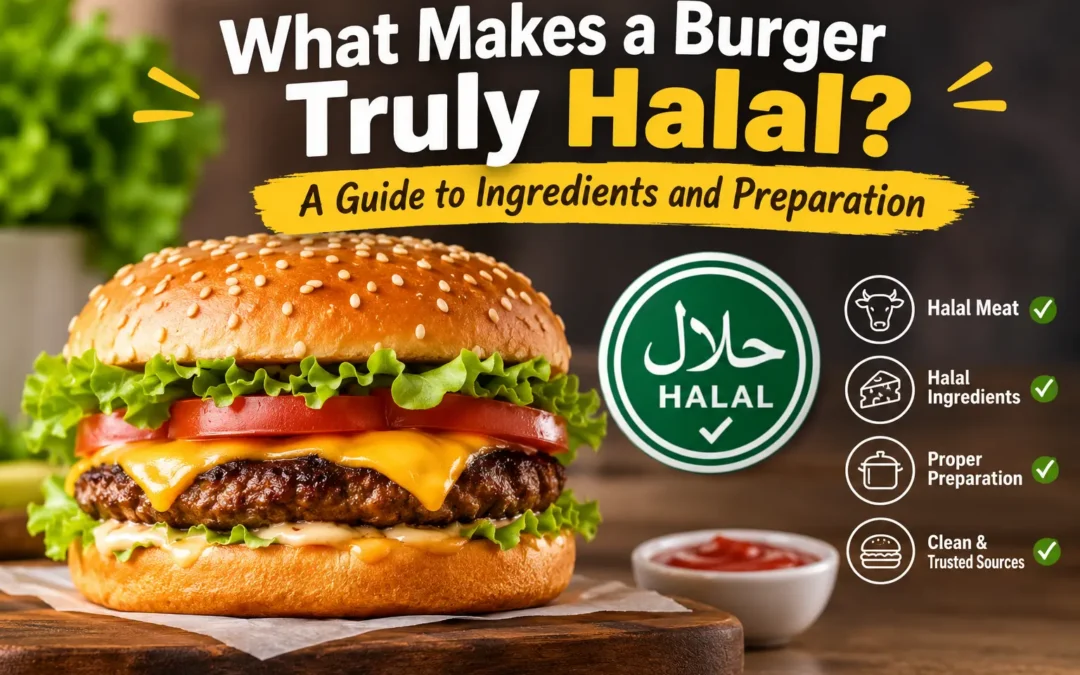
A delicious burger is about more than its taste, texture, and toppings. For Muslim consumers, knowing whether the food meets halal requirements is equally important. Whether ordering from a restaurant like Zac’s Burger or preparing a burger at home, understanding what goes into it can help you make informed food choices. But what actually makes a burger halal? Is using halal meat enough, or do the ingredients and cooking methods matter too? Let’s explore the essential factors.
1. Halal Meat: The Most Important Ingredient
The foundation of a halal burger is its meat. Beef, chicken, and lamb are generally permissible in Islam, but the animal must be slaughtered according to Islamic requirements.
Simply choosing beef or chicken does not automatically make a burger halal. The meat must meet specific conditions.
What Should You Check?
- Permissible animal: The meat must come from an animal that is allowed under Islamic dietary laws.
- Islamic slaughter: The animal must be slaughtered according to the required Islamic method.
- Reliable sourcing: Restaurants should purchase meat from trustworthy suppliers who can provide appropriate halal certification or documentation.
- Proper handling: Halal meat should be stored and handled separately from non-halal products.
These steps help ensure that the main ingredient meets halal dietary requirements before it reaches the kitchen.
2. Check Every Ingredient, Not Just the Meat
One common misunderstanding is that a burger becomes halal simply because it contains halal beef or chicken. However, other ingredients can also affect its halal status.
Some ingredients may contain animal-derived substances, alcohol-based components, or additives that require further checking.
Common Ingredients That Need Attention
Cheese: Most traditional cheese is made using rennet, an enzyme used in the cheese-making process. Its source matters, as animal-derived rennet must meet halal requirements. Microbial or suitable plant-based alternatives may also be used.
Burger sauces: Mayonnaise, barbecue sauce, mustard, and special sauces can contain different additives or flavouring ingredients. Check their labels and ingredients, especially when their composition is unclear.
Bacon and meat toppings: Traditional pork bacon is not halal. Some alternatives are made from beef or turkey, but their sourcing and preparation must also meet halal requirements.
Gelatine and additives: Certain food additives may come from animal sources. Their origin should be verified rather than assumed.
Reading ingredient labels and asking restaurants about their suppliers can help avoid uncertainty.
3. Can Cooking Methods Affect a Burger’s Halal Status?
Yes. Even when all the ingredients are halal, food preparation and kitchen practices are important.Cross-contamination can occur when halal and non-halal products come into contact through shared equipment or cooking surfaces.
For example, a halal beef patty cooked on the same grill used for pork products without proper separation and cleaning may create a serious halal concern.
Important Kitchen Practices
Restaurants should follow these precautions:
- Use separate cooking equipment for halal and non-halal foods.
- Clean grills, utensils, and preparation surfaces properly.
- Store halal ingredients separately.
- Use clean gloves and preparation tools when handling different food products.
- Avoid using cooking oils or fats from non-halal sources.
These practices help maintain food separation throughout the preparation process.
4. What About Burger Buns and Other Toppings?
The bun is another ingredient that deserves attention. Although most basic burger buns contain familiar ingredients such as flour, yeast, water, and sugar, some commercial products may include additional substances. Certain emulsifiers, enzymes, and dough conditioners can have animal-derived origins. Their sources should be checked when necessary.
Vegetables such as lettuce, tomatoes, onions, and cucumbers are generally straightforward halal-friendly additions. However, processed toppings and speciality ingredients may require extra attention.
A simple approach is to check the complete ingredient list rather than focusing only on the meat.
5. How Can You Identify a Halal Burger When Eating Out?
Choosing a burger while dining out can sometimes be confusing, particularly when restaurants do not clearly explain their ingredients or preparation methods.
If you are looking for the Best Burger, taste and presentation are not the only things worth considering. Understanding its halal status is equally important.
Here are some practical questions you can ask before ordering:
- Is the beef or chicken sourced from a halal-certified supplier?
- Can you confirm that the meat has been slaughtered according to Islamic requirements?
- Are the sauces and cheese made with halal-suitable ingredients?
- Do you use separate grills and utensils for halal food?
- Is there any possibility of cross-contamination during preparation?
Look for Reliable Halal Certification
A recognised halal certification can provide additional confidence. However, certification standards and authorities may differ between countries.
Check whether the certificate is valid and issued by a recognised organisation. If certification is unavailable, ask the restaurant for information about its meat suppliers, ingredients, and kitchen practices.
Clear answers are more helpful than relying on assumptions or appearance.
6. Common Mistakes People Make When Checking Halal Food
Even careful consumers can overlook certain details when ordering burgers.
Here are some common mistakes to avoid:
- Assuming all beef is halal: The animal’s type and slaughter method both matter.
- Ignoring sauces: Some sauces may contain questionable ingredients.
- Overlooking cheese: The source of rennet can affect its halal suitability.
- Trusting appearance: A burger’s appearance cannot confirm its halal status.
- Forgetting preparation practices: Shared grills and utensils can create cross-contamination concerns.
Taking a few extra moments to ask questions can help you make a more informed decision.
Final Thoughts
A truly halal burger involves much more than selecting permissible meat. Every part of the process matters, from sourcing and slaughter to sauces, toppings, storage, and cooking practices. By understanding these details and asking the right questions, consumers can enjoy their favourite burgers while making choices that align with their dietary requirements.
Frequently Asked Questions (FAQs)
1. Is a beef burger automatically halal?
No. Beef comes from a permissible animal, but it must also be slaughtered according to Islamic requirements. Its ingredients and preparation methods should meet halal standards.
2. Can cheese make a burger non-halal?
Yes, depending on the source of its ingredients. Some cheeses use animal-derived rennet, so checking whether the rennet is halal-certified or comes from an acceptable alternative is important.
3. Are chicken burgers always halal?
No. Chicken is generally permissible, but its slaughter, sourcing, additional ingredients, and preparation must also meet halal requirements.
4. Is a vegetarian burger always halal?
Not necessarily. Although vegetables are generally permissible, processed ingredients, sauces, cheese, and preparation practices should still be checked.
5. Does halal certification matter when buying burgers?
Yes. Certification from a recognised halal authority provides useful assurance about ingredients, sourcing, and production practices. It can help consumers make more confident choices.