

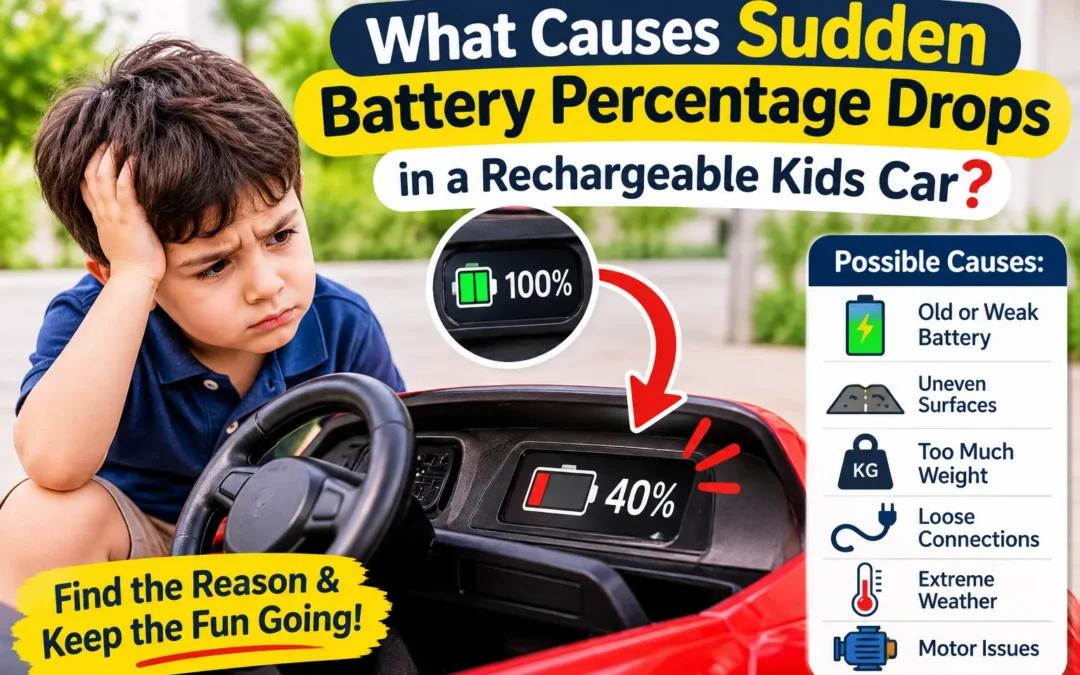
Kids Car batteries usually show how much power is left through a battery indicator or display. But what happens when the battery percentage suddenly drops from 80% to 40%, even after a short drive? This can be confusing for parents, especially when the vehicle was fully charged before use. A sudden drop does not always mean the battery is damaged. It can happen because of heavy use, weak battery cells, loose connections, or problems with the battery display. Understanding these causes can help parents find the problem before it gets worse.
Why Does the Battery Percentage Drop So Quickly?
A battery percentage display gives an estimate of how much power is available. It does not always show the exact amount of energy left inside the battery.
When the vehicle starts moving, its motor needs electricity to turn the wheels. If the battery is under extra pressure, the voltage can temporarily drop. This may cause the battery indicator to show a lower percentage than expected.
Sometimes the percentage increases again when the vehicle stops because the battery is no longer supplying as much power.
However, if the percentage keeps falling quickly, there may be an issue that needs checking.
7 Common Reasons for Sudden Battery Percentage Drops
Several things can affect how quickly a rechargeable battery loses power. Here are seven common reasons parents should know about.
1. An Old or Weak Battery
One of the most common reasons is an ageing battery. Over time, rechargeable batteries lose their ability to store energy. Even after a full charge, an old battery may not provide the same driving time as before.
For example, a vehicle that once ran for an hour may now lose power after 20 or 30 minutes.
What to do: If the battery percentage drops quickly every time you use the vehicle, have the battery tested. It may need replacement.
2. Driving on Uneven Surfaces
The surface where the vehicle is driven can affect battery usage. Driving on grass, sand, slopes, or rough ground requires more power than driving on a smooth floor. The motor has to work harder to move the vehicle.
This extra effort can make the battery percentage fall faster.
What to do: Use the vehicle on suitable surfaces and follow the manufacturer’s recommendations for outdoor use.
3. Carrying Too Much Weight
Every ride-on vehicle has a maximum weight limit. When a child carries extra items or the vehicle carries more weight than recommended, the motor needs additional power to move it.
This can increase battery consumption and reduce driving time.
What to do: Always follow the recommended weight limit. Avoid carrying extra weight that the vehicle is not designed to handle.
4. Loose Battery Connections
Sometimes the battery itself is not the problem. Loose or damaged wires can affect the flow of electricity. If a battery connection is loose, the vehicle may receive an unstable power supply. This can cause sudden changes in the battery display or unexpected power loss.
What to do: Check for visible damage around the battery connections. If wires are loose, damaged, or burnt, stop using the vehicle and ask a qualified technician to inspect them.
5. A Faulty Battery Indicator
Not every sudden percentage drop means the battery is losing power quickly. Sometimes the battery display itself gives incorrect readings. It may show 90% one moment and 60% a few minutes later, even though the actual battery condition has not changed that much.
This can happen because of a faulty display, incorrect voltage readings, or a problem with the battery monitoring system.
What to do: Notice whether the vehicle’s driving time has also become shorter. If the vehicle works normally but the display changes suddenly, the indicator may need checking.
6. Extreme Weather Conditions
Temperature can also affect battery performance. Very hot conditions may speed up battery wear, while cold temperatures can temporarily reduce the power available from some battery types.
For example, a vehicle used in a cold outdoor area may show a faster battery drop than it does in a comfortable indoor environment.
What to do: Avoid leaving the vehicle in direct sunlight or extremely cold places for long periods. Follow the battery manufacturer’s storage and temperature instructions.
7. A Problem With the Motor
The motor uses battery power to move the vehicle. If the motor or gearbox has a problem, it may need more electricity than usual. This can happen when a motor becomes worn out, a wheel gets stuck, or the gearbox is damaged.
As a result, the battery may lose power faster than expected.
What to do: Listen for unusual motor sounds and check whether the wheels move freely. If the vehicle struggles to move or makes grinding noises, arrange a professional inspection.
How Can You Tell If the Battery Is Actually Weak?
A sudden percentage drop can sometimes be caused by the display rather than the battery. To understand what is happening, look for other signs.
- Shorter driving time: The vehicle stops much sooner than it used to.
- Slow movement: The vehicle struggles to move even on smooth surfaces.
- Sudden shutdowns: The vehicle stops working even when the display shows some battery power remaining.
- Longer charging time: The battery takes more time to reach full charge.
- Quick power loss: The battery percentage falls rapidly during normal use.
If several of these signs appear together, the battery may be getting weak or there may be another electrical problem.
How Can You Prevent Sudden Battery Drops?
Good charging and usage habits can help maintain battery performance.
- Charge correctly: Follow the recommended charging time and use a compatible charger.
- Avoid complete discharge: Follow the battery manufacturer’s instructions instead of repeatedly allowing it to become completely empty.
- Check the weight limit: Extra weight can increase the power needed by the motor.
- Keep the wheels clean: Remove dirt or objects that may stop the wheels from moving freely.
- Store properly: Keep the vehicle in a dry place away from extreme temperatures.
- Check the connections: Look for loose wires or visible damage.
- Watch battery performance: Notice changes in charging time and driving duration.
When comparing a kids electric car, parents should also check its battery capacity, motor power, and expected running time. These details help explain how much power the vehicle needs during normal use.
When Should You Replace the Battery?
A battery may need replacement when it no longer holds enough charge to operate the vehicle properly. However, do not replace it immediately after noticing one sudden percentage drop. First, check the charger, battery connections, motor, and display.
If the problem continues, have the battery tested by a qualified technician. If it is damaged, swollen, leaking, or producing unusual heat, stop using and charging it.
Parents purchasing rechargeable ride-on vehicles through online stores such as ToysUAE can also check the battery specifications and charging instructions before making a purchase.
Final Thoughts
A sudden battery percentage drop does not always mean that the battery is damaged. Heavy weight, rough surfaces, loose connections, motor problems, and incorrect display readings can all affect battery performance.
Parents should pay attention to changes in driving time, charging behaviour, and vehicle movement. Regular checks and proper charging habits can help identify problems early and keep the vehicle working smoothly for longer.
Frequently Asked Questions (FAQs)
1. Why does my ride-on car battery drop from 100% to 70% quickly?
This may happen because of an ageing battery, heavy vehicle load, rough driving surfaces, or an incorrect battery reading. If it happens regularly, have the battery and electrical system checked.
2. Can a battery percentage display be wrong?
Yes. A faulty display or inaccurate voltage reading can show sudden percentage changes even when the actual battery level has not dropped by the same amount.
3. Why does the battery percentage increase again after stopping?
When the motor stops using electricity, the battery voltage may return to a higher level. This can make the battery indicator show a higher percentage.
4. Does driving on grass use more battery power?
Yes. Grass and other rough surfaces create more resistance, making the motor work harder and use more electricity.
5. How do I know if my battery needs replacement?
Shorter driving time, slow movement, repeated power loss, and difficulty holding a charge can indicate that the battery is getting weak. A battery test can help confirm the problem.
6. Can I keep using the vehicle if the battery percentage drops suddenly?
If the vehicle is working normally, check the battery display and monitor its performance. However, if it stops unexpectedly, overheats, or shows signs of battery damage, stop using it until the problem has been checked.