

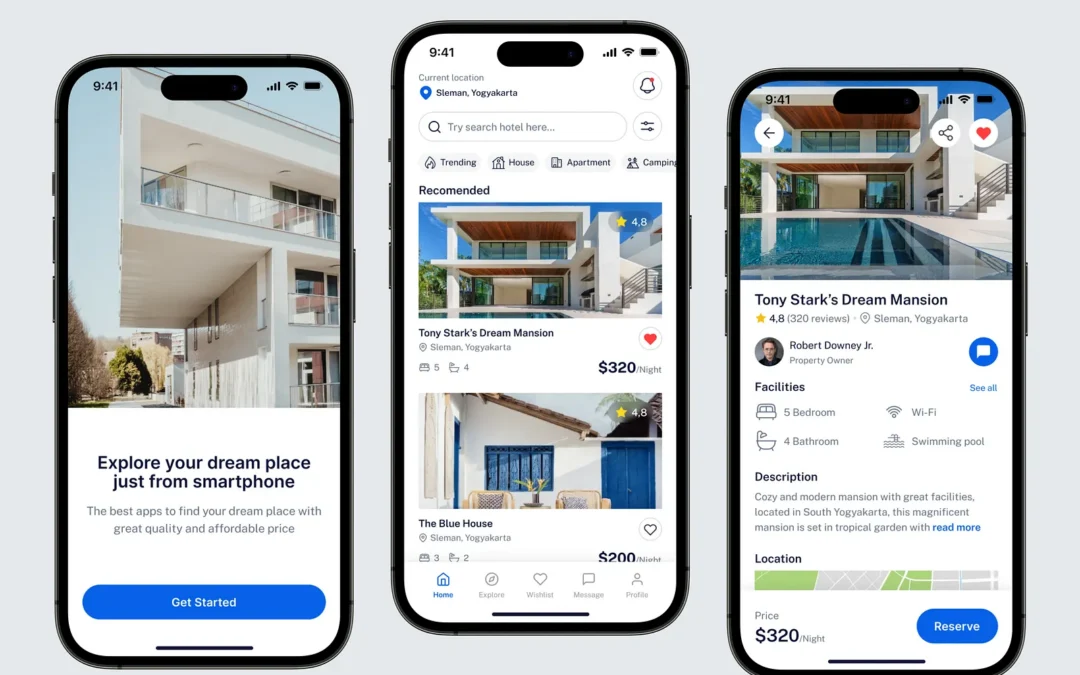
Elena Torres got the job offer on a Monday and had six weeks to move from Phoenix to Denver. She had never lived in Colorado, knew nobody there, and couldn’t afford three separate house-hunting trips. So she did most of it from her couch. She set up saved searches with instant alerts, took video tours at midnight, checked commute times to her new office, and compared a dozen neighborhoods on a map. On the one weekend she flew in, she toured only three homes, and she made an offer on the second. The whole process felt less like a gamble and more like a well-organized project.
Experiences like hers are why developers, brokerages, and proptech founders keep calling a Real Estate App Development Company when they plan their next product. Buying, renting, and managing property used to rely on yard signs, newspaper listings, and long phone tag. Now much of it happens in the palm of your hand. This guide looks at how real estate apps are reshaping the property journey, what features matter most, where the technology still disappoints, and what builders should think about before they start.
How House Hunting Used to Feel
Not long ago, finding a home meant driving around neighborhoods looking for signs, calling agents, waiting for callbacks, and visiting open houses that turned out to be nothing like the photos. Information was guarded. Agents held access to the Multiple Listing Service, and buyers relied on them for nearly every detail.
Renters had it rough too. Classified ads were vague, scams were common, and applications involved paper forms and fax machines in some places. Landlords chased rent by phone, and tenants reported repairs through voicemail.
That world felt slow and opaque. Smartphones and cloud software changed both qualities, and the shift happened faster than most people in the industry expected.
Search That Actually Understands Buyers
The first big leap was search. Portals like Zillow, Redfin, Realtor.com, and Trulia in the United States, Rightmove, Zoopla, and OnTheMarket in the UK, and Bayut and Property Finder in the Gulf put listings in one searchable place. In Pakistan, Zameen.com took a similar role for buyers, renters, and developers.
Modern apps go beyond basic filters. Users can draw a custom search area on a map, filter by lot size, school district, or pet policy, and sort by days on market. Saved searches fire push notifications the moment a matching property appears, which matters in competitive markets where good homes vanish in days.
Smarter engines add natural language. Instead of clicking six dropdowns, you can type “three-bedroom near a park under 600 thousand with a home office,” and the app translates that into filters. Recommendation tools learn from the homes you save and hide, then surface better matches over time.
For Elena, those alerts were the difference. She saw her future kitchen listing eight minutes after it went live, and she scheduled a virtual tour before most competitors woke up.
Visual Experiences: 3D Tours, Video, and Virtual Staging
Photos only tell part of the story. Real estate apps now offer richer ways to see a property.
3D tours. Matterport scans let buyers walk through a home on their phone as if they were standing in it, measure rooms, and view floor plans. Many people tour dozens of homes this way before visiting any in person.
Live video showings. Agents walk through a property on FaceTime or Zoom, answering questions in real time. This helps out-of-town buyers, investors abroad, and anyone who can’t take time off.
Virtual staging. Empty rooms feel cold. Software can place furniture digitally so buyers imagine living there, though honest listings should label staged images clearly.
Augmented reality. Some apps let users point a phone at a room and see how a sofa or a paint color would look. Developers and architects use AR to show unfinished projects overlaid on real sites.
The point isn’t gimmicks. These tools reduce wasted trips, filter out poor fits, and save everyone time. A buyer who has already “walked” a house arrives with sharper questions.
Data and Transparency in Your Pocket
Perhaps the biggest change is how much information ordinary people can access. Price history, tax records, neighborhood demographics, school ratings from GreatSchools, walkability from Walk Score, flood risk, and estimated values from tools like Zillow’s Zestimate sit a tap away.
That transparency shifts power. Buyers compare prices per square foot, check how long similar homes took to sell, and notice when a listing has been reduced three times. Sellers see how their property stacks up before choosing a list price.
Caution is still needed. Automated valuations can be off by a wide margin, especially in unusual homes or fast-moving markets. A good agent or appraiser still adds judgment that an algorithm lacks. Treat app estimates as starting points rather than facts.
Communication, Showings, and Paperwork
Buying a home involves hundreds of small exchanges. Apps simplify them. In-app chat connects buyers with agents, and scheduling tools like ShowingTime coordinate tours without endless texts. Document platforms such as DocuSign and Dotloop let people sign offers, disclosures, and leases from a phone.
Closing is more digital too. Buyers upload documents securely, track the status of inspections and appraisals, and see a checklist of what comes next. Fewer emails get lost, and anxious clients stop wondering what’s happening.
Of course, large financial decisions deserve care. Wire fraud targeting homebuyers is real, so any app handling payments or closing instructions needs strong verification. Buyers should always confirm bank details by phone using a trusted number before sending money.
Mortgage and Finance Tools
Money questions shape every property decision. Apps now offer mortgage calculators, affordability estimates, rate comparisons, and digital pre-approval from lenders like Rocket Mortgage and many banks.
A first-time buyer can see how a different down payment changes the monthly cost, how property taxes and insurance add up, and what rate they might qualify for. Clarity early prevents heartbreak later.
For investors, apps display rental yields, cash flow projections, and neighborhood trends. Some platforms allow fractional ownership, where several people invest small amounts in a single property. These products come with regulatory and liquidity risks, so careful reading matters.
Renting and Property Management Go Digital
The rental experience may have changed even more than buying. Apps like Apartments.com, Zumper, and Rent.com help tenants find places, and many include secure application flows, credit checks, and e-signed leases.
After move-in, property management software such as AppFolio, Buildium, and RentCafe lets tenants pay rent, submit maintenance requests with photos, and message managers. Landlords track payments, schedule repairs, and generate reports without paper trails.
For small landlords, the effect is profound. A person who owns three flats and works full time can handle everything from a phone. Tenants appreciate quick responses and clear records, and disputes shrink when conversations are documented.
Smart Homes and Connected Living
Modern properties increasingly come with connected devices: smart locks, thermostats, cameras, leak sensors, and energy monitors. Apps from Nest, Ring, and others let owners and tenants control them remotely.
Property managers use smart locks to give contractors time-limited access, and short-term rental hosts send guests unique codes. Energy dashboards help residents spot waste, while leak sensors can prevent costly water damage.
Privacy needs attention. Cameras and sensors collect sensitive data about people’s daily lives. Landlords and developers must be clear about what’s recorded, who sees it, and how long it’s kept.
The Agent’s Toolkit
Real estate apps aren’t only for consumers. Agents and brokerages rely on mobile tools to stay competitive.
CRM apps log client details, notes, and follow-ups. Lead management tools respond to inquiries within minutes. Listing apps generate descriptions, schedule open houses, and syndicate listings to multiple portals. Voice notes and automated reminders keep busy agents organized between showings.
Artificial intelligence now drafts listing copy, summarizes client calls, and answers common questions around the clock. It can’t replace the trust and negotiation skills of a seasoned agent, but it removes administrative friction and gives professionals more time for people.
Industry rules are also in motion. In the United States, the 2024 settlement involving the National Association of Realtors altered how buyer agent compensation is handled, pushing agents to explain their value more clearly. Apps that help them show transparent services and fees may find a receptive audience.
Where the Gaps Still Are for Builders
Plenty of founders scan for mobile app ideas and assume the property space is already saturated by Zillow and Rightmove. It isn’t. The giants dominate search, yet many everyday frustrations remain unsolved.
Think about renters trying to prove a good payment history, small landlords drowning in spreadsheets, buyers confused by renovation costs, and agents juggling too many tools. Possible directions include:
- Renovation estimators. Scan a room, get a rough cost range and a vetted contractor list.
- Neighborhood reality checks. Combine noise, air quality, commute reliability, and local reviews into a plain-language score.
- Closing document vaults. One secure place for every file, signature, and deadline.
- Co-living and roommate matching. Especially useful in expensive cities.
- Off-plan project trackers. Photo updates, payment schedules, and handover timelines for buyers purchasing before construction ends.
- Small landlord toolkits. Rent collection, maintenance tracking, and tax-ready reports.
- Inspection checklists. Guided walk-throughs with photo capture and instant reports.
The winning products tend to solve one painful problem exceptionally well rather than copy a portal.
What Builders Need to Plan For
Real estate apps depend on data, and data brings technical and legal duties.
Listing feeds. In the US, listings come through MLS systems using standards like IDX and the RESO Web API. Access usually requires licensing and compliance with local rules. In other markets, builders work with portals, brokerages, or developer data.
Maps and location. Reliable mapping, geocoding, and routing services are essential and can be a meaningful operating expense at scale.
Performance. Photo-heavy screens and large lists need smart caching and image optimization, or the app will feel sluggish on mid-range phones.
Fair housing and fairness. In the US, the Fair Housing Act prohibits discrimination, and search filters, advertising, and algorithms must avoid steering or bias. Similar equality laws apply in other countries.
Privacy and security. Personal and financial details demand encryption, access controls, and compliance with laws like GDPR, UK GDPR, and CCPA.
Verification. Fake listings and rental scams harm trust. Verified agents, photo checks, and reporting tools help.
Challenges the Industry Still Faces
Data accuracy. Outdated listings frustrate users. Fresh feeds and clear update times matter.
Digital divide. Not everyone is comfortable with apps. Human support should remain available.
Fragmented markets. Different countries and regions have different rules, formats, and norms, so scaling is hard.
Over-reliance on automation. Algorithms can mislead if treated as final answers.
Emotional stakes. A home is more than a transaction. Apps should help people feel supported, not processed.
Frequently Asked Questions
How are real estate apps changing home buying? They give buyers instant access to listings, price history, virtual tours, and agent communication, which reduces wasted trips and makes decisions better informed.
Are real estate app valuations accurate? They’re useful estimates, but they can be off, especially for unique homes or fast-changing markets. Use them as a guide and confirm with an agent or appraiser.
Can I buy or rent a property entirely through an app? You can handle searching, touring virtually, applying, and signing documents digitally in many places. Legal and local requirements still apply, and some steps may need in-person verification.
What features should a real estate app include? Map-based search, smart filters, saved search alerts, high-quality photos and tours, in-app messaging, scheduling, document signing, and strong privacy controls.
How do landlords use apps to manage rentals? They collect rent online, track maintenance requests, screen applicants, store leases, and communicate with tenants from one dashboard.
How long does it take to build a property app? A focused first version typically takes three to six months. A full platform with listings feeds, payments, and integrations can take a year or more.
Final Thoughts
A home is the largest purchase most people ever make, and a rental is where daily life happens. Both deserve clarity, speed, and respect. Real estate apps have started to deliver that by turning a foggy, gatekept process into something people can understand and control.
Elena unpacked her last box in Denver a few weeks after that whirlwind search. She still keeps her saved searches, just to watch the market out of curiosity. But the app that matters most now is the one that pings when her landlord’s repair crew is on the way, or when the property tax bill arrives. The best property technology doesn’t end with a sale. It stays useful long after the keys change hands.