

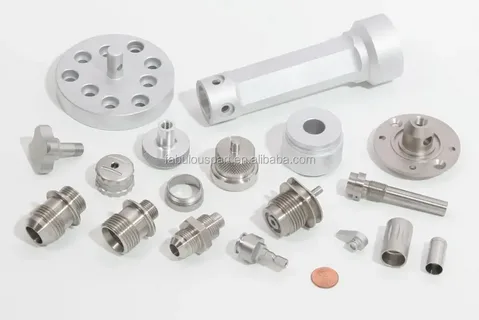
In modern manufacturing, precision and strength are essential for components used in demanding environments. CNC turning parts play a critical role in industries such as automotive, aerospace, construction, oil and gas, and heavy machinery. These components are engineered to withstand extreme stress while maintaining tight tolerances and consistent performance.
This article explores how durable CNC turning components are designed, manufactured, and applied in heavy-duty industrial use, highlighting their benefits, materials, and importance in modern engineering.
Importance of CNC Turning Parts in Industrial Applications
CNC turning parts are widely used in industrial systems where accuracy and durability are non-negotiable. These components are produced using computer-controlled lathes that ensure every cut, curve, and dimension meets exact specifications. This precision makes them ideal for machines that operate under continuous load and harsh conditions.
In heavy-duty industries, even minor component failure can lead to downtime and financial loss. CNC turning technology reduces such risks by producing highly consistent and reliable parts that can endure pressure, vibration, and heat.
Key points:
- Provides high dimensional accuracy for industrial machinery
- Ensures consistency across mass production batches
- Reduces machine downtime and maintenance costs
- Suitable for high-load and high-speed applications
- Improves overall equipment efficiency and safety
Materials Used in Durable CNC Turning Parts
The strength and durability of CNC turning parts largely depend on the materials used in their manufacturing. Common materials include stainless steel, carbon steel, aluminum, brass, and titanium alloys. Each material is selected based on its mechanical properties and intended industrial application.
For heavy-duty use, manufacturers often prefer hardened steel or alloy-based materials because they offer superior resistance to wear, corrosion, and extreme temperatures. This ensures that the components perform reliably even in the toughest environments.
Key points:
- Stainless steel offers excellent corrosion resistance
- Carbon steel provides high strength and toughness
- Aluminum is lightweight and ideal for reducing machine weight
- Titanium is used for extreme strength-to-weight ratio applications
- Material selection depends on load, environment, and application
Manufacturing Process of CNC Turning Parts
The production of CNC turning parts involves a highly controlled machining process. A raw material bar is mounted onto a CNC lathe, where it rotates at high speed while cutting tools shape it into the desired geometry. Computer programming ensures every movement is precise and repeatable.
Advanced CNC machines allow multi-axis operations, enabling the production of complex shapes with minimal manual intervention. This automation improves production efficiency and ensures consistent quality, especially for large-scale industrial requirements.
Key points:
- Computer-controlled machining ensures precision and repeatability
- Multi-axis turning allows complex geometries
- Reduces human error in manufacturing
- Enables high-speed production for bulk orders
- Produces smooth surface finishes and tight tolerances
Advantages of Using CNC Turning Parts in Heavy Machinery
Heavy machinery requires components that can endure extreme mechanical stress, vibration, and continuous operation. CNC turning parts are specifically designed to meet these demands, making them a preferred choice in industrial engineering.
Their ability to maintain structural integrity under pressure ensures long operational life and reduces the need for frequent replacements. This directly contributes to cost savings and improved productivity in industrial operations.
Key points:
- High resistance to mechanical stress and wear
- Long service life reduces replacement frequency
- Enhances machine performance and reliability
- Supports high-temperature and high-pressure environments
- Minimizes operational downtime and maintenance needs
Industrial Applications of CNC Turning Parts
CNC turning parts are used in a wide range of industries due to their versatility and durability. From engine components in automotive systems to precision parts in aerospace equipment, these components are essential for smooth operation.
In sectors like oil and gas, construction, and manufacturing, CNC turning parts are used in pumps, valves, shafts, and connectors. Their reliability ensures safe and efficient operation in critical systems.
Key points:
- Automotive industry: engine shafts, gears, and connectors
- Aerospace industry: precision rotating components
- Oil and gas: valves, pumps, and drilling equipment parts
- Construction machinery: hydraulic and mechanical systems
- Manufacturing: industrial automation and machine tools
Conclusion
Durable CNC turning parts are the backbone of modern heavy-duty industrial systems. Their precision engineering, material strength, and advanced manufacturing process make them indispensable in environments where reliability and performance are critical. As industries continue to evolve, the demand for high-quality cnc turning parts will only increase, driving innovation in machining technology and material science.
By investing in well-manufactured CNC turning components, industries can ensure long-term efficiency, reduced downtime, and improved operational safety.