

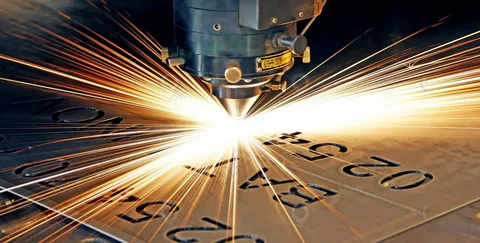
Modern manufacturing industries rely heavily on precision, speed, and cost efficiency to stay competitive. One of the most important technologies supporting these goals is laser cutting services, which offer unmatched accuracy and flexibility in shaping metals and other materials. From automotive production to aerospace engineering, laser cutting has become a backbone of industrial fabrication.
Below is a detailed overview of how professional laser cutting services are transforming industrial applications across different sectors.
Precision Engineering with Laser Cutting Technology
Professional laser cutting services are widely used in precision engineering where even the smallest error can affect product performance. The laser beam delivers extremely fine cuts, making it ideal for complex industrial components that require tight tolerances.
In industries such as aerospace, electronics, and medical device manufacturing, precision is not optional—it is essential. Laser cutting ensures smooth edges, minimal material distortion, and consistent results across large production batches.
Key benefits of precision laser cutting:
- Extremely accurate cutting for complex designs
- Minimal heat-affected zones on materials
- High repeatability for mass production
- Suitable for thin and thick metal sheets
The ability to achieve micron-level accuracy makes laser cutting services indispensable in modern industrial workflows where quality cannot be compromised.
Efficiency and Speed in Industrial Production
One of the biggest advantages of laser cutting services is the speed of production. Traditional cutting methods often require multiple steps, but laser systems can cut, shape, and finish materials in a single operation.
This increased efficiency significantly reduces manufacturing time and allows industries to meet tight deadlines without sacrificing quality. Automated laser systems also reduce human intervention, lowering the chances of error and improving consistency.
Efficiency advantages include:
- Faster production cycles compared to mechanical cutting
- Reduced setup and tooling time
- Continuous automated operation capability
- Lower downtime in manufacturing processes
As industries scale up production, laser cutting services play a vital role in maintaining high output while keeping operational costs under control.
Versatility Across Multiple Industrial Materials
Laser cutting services are not limited to one type of material. They are widely used for cutting stainless steel, aluminum, copper, brass, and even non-metal materials like plastics and composites.
This versatility makes laser cutting highly valuable for industries that require multi-material fabrication. Whether producing automotive parts or structural components, manufacturers can rely on one technology for diverse applications.
Material versatility advantages:
- Cuts a wide range of metals and alloys
- Suitable for reflective and non-reflective materials
- Works on thin sheets and thick industrial plates
- Adaptable to customized industrial requirements
Because of this flexibility, laser cutting services reduce the need for multiple machines, simplifying production workflows and improving overall efficiency.
Cost-Effectiveness and Reduced Material Waste
Although laser cutting technology is highly advanced, it is also cost-effective in the long run. The precision of the laser beam reduces material waste, ensuring maximum utilization of raw materials.
Additionally, the reduced need for secondary finishing processes lowers labor costs and production expenses. Industries benefit from both high-quality output and improved profitability.
Cost-saving benefits include:
- Minimal material wastage during cutting
- Reduced need for post-processing and finishing
- Lower labor costs due to automation
- Efficient use of raw industrial materials
By optimizing resources and reducing waste, laser cutting services provide a strong return on investment for manufacturers of all sizes.
Applications in Modern Industrial Sectors
Laser cutting services are used across a wide range of industries due to their adaptability and precision. From heavy machinery to delicate electronic parts, this technology supports diverse manufacturing needs.
Industries such as automotive, aerospace, construction, and energy rely on laser cutting for producing high-performance components that meet strict quality standards.
Common industrial applications:
- Automotive body panels and engine parts
- Aerospace structural components
- Electrical enclosures and control panels
- Construction frameworks and metal fittings
The growing demand for high-precision manufacturing continues to expand the role of laser cutting services in industrial innovation.
Conclusion
In today’s competitive manufacturing environment, laser cutting services have become essential for delivering precision, efficiency, and cost savings across multiple industries. Their ability to cut complex designs with high accuracy, work with various materials, and reduce production waste makes them a cornerstone of modern industrial fabrication.
As technology continues to advance, laser cutting will play an even greater role in shaping the future of industrial production, helping businesses achieve higher quality standards and improved operational performance.