

The Critical Safety Gap in Most Rental Properties
Smoke and carbon monoxide detection in rental properties has historically relied on standalone battery-powered alarms that beep loudly when triggered. These alarms have saved countless lives, but they also have well-known limitations. Batteries die unnoticed between guest stays. Alarms can be disabled by frustrated guests responding to false alerts from cooking smoke. Critical incidents go undetected by the property owner because there is no remote notification mechanism. By the time damage or injury becomes apparent, the host learns about it only after the fact.
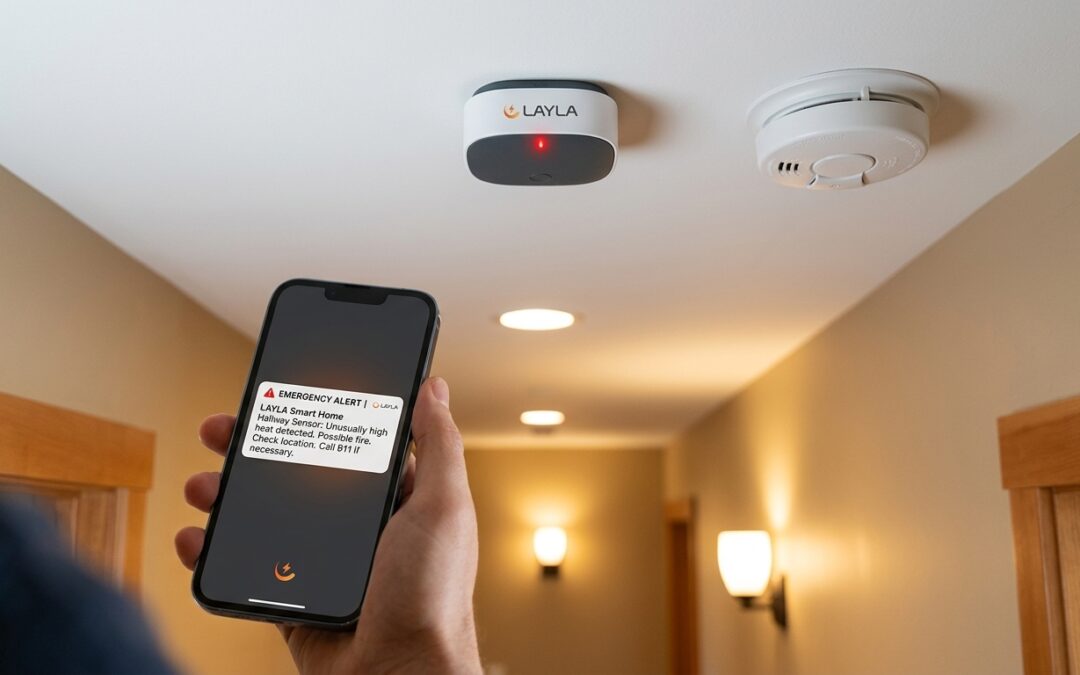
Modern smart sensor systems close this gap by providing continuous, remotely-monitored detection of smoke, particulate matter spikes, and chemical changes that indicate fire or carbon monoxide exposure. Alerts arrive on the host’s phone within seconds of detection, allowing immediate response while traditional alarms are still sounding inside an empty property. The combination of dedicated life-safety devices required by code and supplementary smart monitoring creates layered protection that has become the standard for serious short-term rental operators.
How Smart Sensors Detect Fire and CO Risks
Smart environmental sensors detect fire and carbon monoxide indicators through several complementary measurement streams. Particulate matter sensors detect the smoke particles characteristic of combustion. VOC sensors recognize the chemical signature of burning materials and certain combustion gases. Temperature sensors flag rapid increases that could indicate fire conditions before smoke reaches detectable levels. Together these streams provide earlier warning than traditional smoke detectors alone, particularly for slow-developing fires like smoldering electrical issues.
Carbon monoxide detection traditionally requires a dedicated CO sensor because the gas is odorless and colorless. Modern smart sensors include CO sensing capability alongside their other measurement streams, providing a comprehensive safety overview from a single device. When any of these streams detect concerning conditions, the system sends immediate alerts to the host’s phone with specific information about which condition triggered the alarm and the recommended response. Layla’s smoke and CO detection integrates all of these capabilities into a single device that supplements rather than replaces required life-safety equipment.
What Hosts Should Know About Code Requirements
Smart sensors do not replace the dedicated smoke detectors and carbon monoxide alarms required by most building codes. These code-mandated devices remain essential life-safety equipment and must be properly installed, maintained, and tested per local regulations. Smart sensors instead provide a supplementary layer of monitoring that enhances rather than substitutes for the legally required protection.
The relationship between code-mandated devices and smart monitoring is similar to the relationship between a car’s airbags and an advanced driver assistance system. The airbags are required and provide critical protection during an event. The driver assistance system helps prevent the event in the first place and provides additional information that improves outcomes. Both layers contribute meaningfully to overall safety. Hosts who view smart monitoring as a substitute for required alarms miss the point of layered protection and expose themselves to serious legal and safety risks. Hosts who deploy both layers achieve protection that neither could deliver alone. The Layla all-in-one safety sensor is designed specifically to complement rather than replace required life-safety equipment.
Real-World Scenarios Where Smart Detection Matters
Several real-world scenarios illustrate why smart detection adds value beyond traditional alarms. Consider a small electrical fire that begins smoldering in a wall outlet during the early morning hours while guests sleep. A traditional smoke detector eventually triggers when smoke reaches detection levels, hopefully waking the guests in time. A smart sensor monitoring temperature and air quality may detect anomalous readings before the smoke detector triggers, sending an alert that allows the host to call guests and verify their safety, or in serious cases dispatch fire services proactively.
Another scenario involves carbon monoxide leakage from a malfunctioning gas appliance during a guest absence. Traditional CO alarms trigger only when concentrations reach dangerous levels and only audibly at the property itself. A smart sensor sends immediate remote alerts as soon as elevated CO is detected, allowing the host to contact emergency services and prevent guests from entering an unsafe space when they return. These scenarios are rare in any individual property but inevitable across portfolios of any meaningful size, which is why insurance underwriters increasingly favor smart-monitored properties.
Setting Up Effective Safety Alerts
Effective safety alert configuration balances responsiveness with practicality. Alerts for smoke, CO, and rapid temperature increases should be set to highest priority with immediate notification regardless of time of day, since these conditions represent genuine emergencies that warrant immediate attention. Backup contacts beyond the primary host, such as a local property manager, neighbor, or trusted maintenance contact, ensure that someone can respond physically to the property if the primary host is unreachable.
Lower-priority safety alerts, such as humidity readings indicating mold risk or air quality issues, can be configured for batched notifications rather than immediate alerts to avoid alert fatigue. Most platforms allow nuanced configuration that distinguishes critical safety alerts from informational notifications, ensuring that genuine emergencies always cut through while routine monitoring information arrives in a manageable cadence. Periodically reviewing and updating alert configurations keeps the system aligned with evolving operational realities and prevents the gradual accumulation of unhelpful notifications that train hosts to ignore the platform.
Communicating Safety Features to Guests
Transparent communication about safety monitoring builds guest trust and demonstrates the host’s professionalism. Including a brief mention in the welcome message that the property uses environmental monitoring for safety conditions like smoke, carbon monoxide, and other hazards reassures safety-conscious guests while clearly setting expectations about the privacy-respecting nature of the monitoring. Many guests, particularly families with children and travelers from regions where smoke and CO incidents are widely publicized, actively appreciate the additional protection.
The communication also provides natural opportunities to share important safety information that guests should know regardless of monitoring. The locations of physical fire extinguishers, the recommended evacuation route, the contact information for local emergency services, and basic safety practices around cooking and gas appliances all naturally fit alongside the monitoring disclosure. The combined effect is a guest who feels both well-informed and well-protected, which translates into stronger reviews and higher repeat booking rates.
Why Layered Safety Becomes the New Standard
Layered safety combining code-required alarms with continuous smart monitoring is rapidly becoming the standard for professional short-term rental operations. Insurance underwriters increasingly factor monitoring deployment into premium calculations. Platforms acknowledge the additional safety layer in their listing badges and search algorithms. Guests increasingly expect the kind of professional safety infrastructure that smart monitoring provides, and properties without it begin to feel dated and casual by comparison.
Protect guests with Layla’s safety monitoring alongside your code-required alarms and create the layered protection that meets modern expectations for both safety performance and operational visibility. The combined cost is modest relative to the benefits, the deployment is straightforward, and the resulting peace of mind for both hosts and guests is substantial. In an industry where reputation and risk profile both directly affect profitability, the case for comprehensive safety monitoring continues to strengthen with each passing year.
Frequently Asked Questions
Q1: Do smart sensors replace required smoke and CO alarms?
A: No. Smart sensors supplement code-required alarms but do not replace them. Both layers should be deployed for proper protection.
Q2: How fast does a host get alerted when smoke is detected?
A: Real-time alerts arrive on the host’s phone within seconds of detection, often before traditional alarms have triggered audibly at the property.
Q3: Can smart sensors detect carbon monoxide accurately?
A: Yes, when equipped with dedicated CO sensors. They should still be used alongside code-required CO alarms rather than as a replacement.
Q4: Will my insurance benefit from having smart safety monitoring?
A: Increasingly yes. Many insurance underwriters now favor monitored properties and may offer premium discounts for verified deployment.
Q5: Should I tell guests about safety monitoring?
A: Yes. Transparent communication about safety features tends to reassure guests and demonstrates professional hosting practices.