For Greer homeowners dealing with restoration or renovation in a property built before 1978, the terms lead remediation and lead abatement come up frequently. They are related but not the same, and the distinction matters when it comes to choosing the right approach, meeting regulatory requirements, and protecting the people in and around the property during and after the work. Understanding what each process involves helps property owners ask the right questions and verify that the work is being done correctly.
What Lead Remediation In Greer Involves
Lead remediation Greer refers to actions taken to reduce or control lead-based paint hazards so they no longer pose a risk of exposure. Remediation does not always mean physical removal. It can involve encapsulation, where intact lead-containing surfaces are covered with a specially formulated coating or material that prevents the paint from chipping, flaking, or releasing dust. It can also involve enclosure, where a new surface is installed over the existing lead-painted one.
In a restoration context, however, encapsulation and enclosure are often not practical options. When water damage, fire damage, or mold remediation requires that painted surfaces be cut, sanded, or demolished, the lead-containing material is being actively disturbed. At that point, physical removal and proper disposal under certified protocols are required rather than containment of the surface in place.
What Lead Abatement In Greer Involves
Lead abatement Greer is a more formal and comprehensive intervention. Abatement permanently eliminates the lead hazard through removal, enclosure, or encapsulation performed to EPA-set standards, resulting in a property that can be certified as lead-safe upon completion of the work.
The abatement process begins with a lead inspection or risk assessment conducted by a certified professional to identify where lead-based paint is present and what condition it is in. A certified abatement contractor then follows a work plan that specifies which surfaces will be addressed, what methods will be used, and how the work area will be contained. After the work is complete, a clearance examination performed by a certified inspector verifies that lead dust levels in the treated area meet the regulatory standard before the space is reoccupied. This final clearance step is what distinguishes certified abatement from general cleanup.
When Remediation Is Sufficient And When Abatement Is Required
The key question is whether the work being performed will actively disturb lead-containing surfaces. If a painted surface is intact and the scope of work does not involve touching it, a remediation approach such as encapsulation may be appropriate. If the restoration or renovation work requires demolition, cutting, or removal of painted materials, abatement procedures are required.
When Remediation Is the Right Approach. Remediation is appropriate when lead-containing surfaces are intact, and the work being performed does not disturb them. Encapsulation, where a certified coating is applied over the existing surface, can control the hazard without physical removal. This approach works in situations where the painted surface is stable, and the restoration scope does not require opening or demolishing the surrounding area.
When Abatement Is Required For most water damage and fire damage restoration jobs in pre-1978 Greer properties, the scope involves opening walls, removing flooring, or demolishing painted surfaces. In those cases, abatement protocols apply, and the work must be performed by a firm certified under the EPA Renovation, Repair, and Painting rule. The age of the property is the first indicator, but it is the specific scope of work that determines which process is legally required. Skipping this step creates health risks and legal liability for the property owner.
EPA Certification Requirements
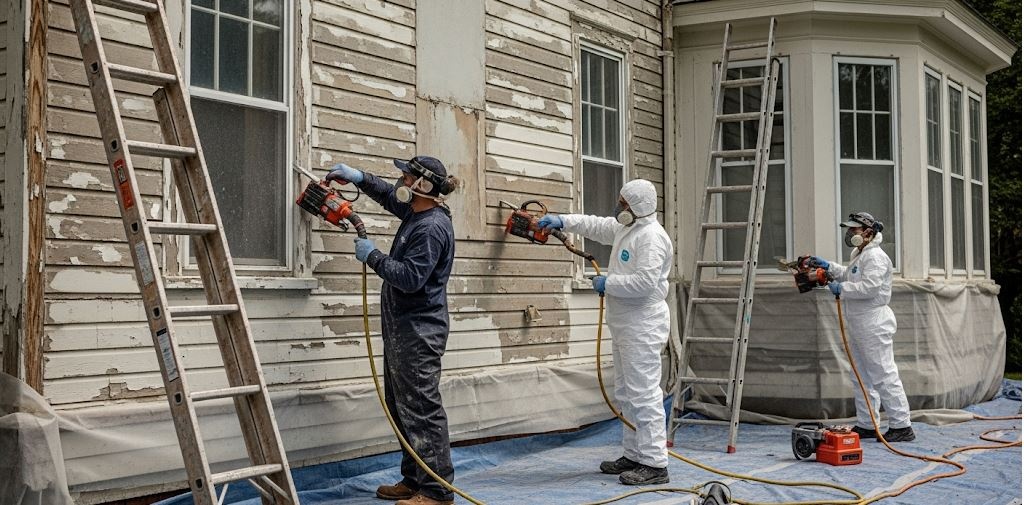
Under EPA regulations, any company performing work that disturbs lead-based paint in pre-1978 residential properties must be a certified firm and must follow specific work practice standards. These include establishing a contained work area, using personal protective equipment, following defined procedures that limit the spread of lead dust, and disposing of lead-containing waste according to regulatory requirements.
Hiring an uncertified contractor for this work creates legal liability for the property owner and puts anyone on the property at risk. Requesting proof of EPA certification before work begins is not an unreasonable ask. A certified firm will have documentation readily available.
Conclusion
Whether a Greer property needs lead remediation or full lead abatement, the work requires a certified, experienced team with the right credentials and protocols in place. Willard’s Restoration is a certified EPA-licensed lead removal company serving Greenville, Easley, Simpsonville, Greer, and the surrounding Upstate area. With IICRC-certified technicians and a thorough assessment process, Willard’s Restoration handles lead concerns as part of a fully coordinated restoration scope. Greer property owners can reach Willard’s Restoration 24 hours a day, 7 days a week.