

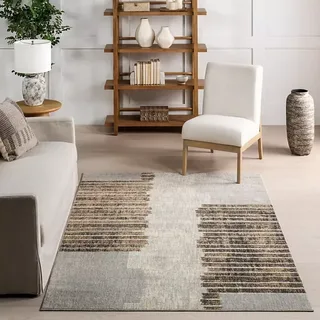
An 8×11 rug sits between several common standard sizes, which makes it useful for rooms that need more coverage than an 8×10 but cannot comfortably hold a 9×12. That extra foot of length may improve furniture placement, dining chair movement, or the balance of a narrow room.
The size alone does not guarantee a good fit. The rug needs a clear relationship with the furniture and enough distance from walls, doors, and vents. Testing the dimensions before buying makes it easier to choose the best orientation and placement.
Mark the Full Size on the Floor
Measure the room and the complete furniture group. Then use painter’s tape to mark an eight-foot by eleven-foot rectangle. Do not rely on the way a rug appears in a showroom or product photograph because surrounding furniture can change its perceived scale.
Before you shop 8×11 rugs, check the exact dimensions shown for each product. Rug categories may use rounded labels, and the actual length or width can vary slightly.
Leave the tape on the floor while you walk through the room. Open doors, move dining chairs, and view the outline from the main entrance. This short test can reveal problems that measurements on paper do not show.
Positioning an 8×11 in a Living Room
In a medium or large living room, an 8×11 rug may support the front legs of a sofa and two chairs. The eleven-foot side often runs parallel to the main sofa, allowing the rug to extend beyond both arms and create a visual frame.
Place the coffee table fully on the rug with comfortable space around it. If the front furniture legs rest on the rug, use a similar amount of overlap for the sofa and chairs. Consistency makes the arrangement feel connected.
In a compact floating layout, all furniture legs may fit on the rug. Make sure the rug remains visible behind the seating rather than ending exactly beneath the rear legs. A small border helps the furniture look settled rather than crowded.
Working With a Sectional
An 8×11 rug can suit a small or medium sectional, but it needs to connect both parts of the L shape. The rug may slide beneath all the front sectional legs while extending into the open seating area.
Avoid placing the rug beneath only the long side while leaving the return completely disconnected. This can divide the sectional visually. Turning the rug or shifting it toward the shorter side may create a better balance.
Measure reclining sections or movable chaise pieces in their active positions. A rug that fits when the sectional is closed may interfere with footrests or movement during daily use.
Using the Rug Beneath a Dining Table
An 8×11 rug may work beneath a rectangular table for four or six people, depending on the table dimensions. Measure the tabletop, then pull every chair out to a normal sitting position and measure the full activity zone.
The chair legs should remain on the rug as people sit and stand. If the rear legs move beyond the eight-foot width, choose a wider size rather than expecting guests to lift chairs over the edge.
Center the rug beneath the table, not automatically in the center of the room. The table and rug should form one visual group. If a chandelier hangs above the table, all three elements usually look best when they share a center line.
Account for Table Extensions
If the table uses extension leaves, decide whether the rug needs to fit the everyday table or its full size. Families that extend the table regularly should measure the longer arrangement, including end chairs.
An 8×11 rug may fit the standard setup but become too short during holidays or gatherings. This may be acceptable if the table is rarely extended, but the decision should be made before purchasing.
Check the walking path behind occupied chairs. The rug should support the chairs without filling the room so completely that people have no comfortable route around them.
Maintain Visible Flooring Borders
Exposed flooring helps frame the rug and keeps the room from feeling crowded. Measure the distance from each rug edge to walls, cabinets, fireplaces, and other fixed features. The border does not need to match exactly on every side, but extreme differences can look unbalanced.
In a living room, the rug should relate to the seating zone rather than the geometric center of the architecture. An off-center fireplace or doorway may make a slightly shifted rug feel more natural.
In a dining room, make sure the rug does not stop partly beneath a buffet or cabinet. These storage pieces usually look cleaner when they remain fully on the hard flooring.
Choose the Right Orientation
The eleven-foot side usually follows the room’s longest direction or the main furniture line. However, a wide seating arrangement may need the rug turned in the opposite direction. Mark both orientations if the room is close to square.
Look at where the edges meet the walking paths. One orientation may place a corner directly in a doorway, while the other keeps all edges within the furniture zone. Function should influence the choice as much as appearance.
Architectural focal points also matter. The rug can guide attention toward a fireplace, media wall, artwork, or window view when its long lines support that direction.
Select Materials for the Room
Living rooms offer more freedom in pile height, especially when furniture is mostly stationary. A soft pile can add comfort, while a low pile is often easier to clean in a busy family room. Pet activity and children should also influence the decision.
Dining rooms usually benefit from a lower or medium pile because chairs need to move smoothly. Crumbs and spills are easier to manage on a surface that can be vacuumed and spot cleaned according to its care instructions.
Use a rug pad suitable for the flooring. It can reduce movement, provide cushioning, and help protect both surfaces. The pad should be slightly smaller than the rug so it remains hidden.
Coordinate the Design
Use existing room colors as a guide, but do not aim for a perfect match. A rug can repeat tones from upholstery, curtains, art, or wood finishes while adding one or two new shades. This creates connection without making the design feel forced.
Consider how furniture will cover the pattern. A central design may disappear beneath a dining table, while a border remains visible. In a living room, a glass coffee table allows more of the rug to show than a solid table.
Shoppers who want to buy luxury rugs online should compare material, construction, pile, care needs, and exact dimensions alongside design. A refined appearance is more valuable when the rug also performs well in the intended room.
Final Thoughts
An 8×11 rug can be a useful choice for living rooms that need extra length and dining rooms where a smaller standard rug does not provide enough chair space. Its proportions support several furniture arrangements without requiring the coverage of a 9×12.
Measure the active furniture zone, test both orientations, and protect the walking paths. Careful placement allows the rug to feel generous, balanced, and practical.
Article 12: Creative Ways to Use a Small Accent Rug Around the Home
A small rug can have a noticeable effect even when it covers only a limited area. It can add softness beside a bed, define a reading corner, introduce color near an entry, or protect flooring beneath a small table. Because it is easy to move, it also provides a flexible way to refresh a room.
The main challenge is making a small rug look intentional. It should connect with furniture, architecture, or a specific function. Placing it in the middle of an unrelated open area may make it look lost, while thoughtful positioning gives it a clear purpose.
Add Comfort Beside a Bed
A small accent rug can create a soft place to step in the morning without extending beneath the entire bed. Place it on the side used most often, keeping the long edge parallel to the bed frame.
3×5 rugs for home can be especially useful in bedrooms with limited floor space. They add comfort while leaving attractive wood, laminate, or tile visible.
If both sides of the bed have enough room, matching or coordinated rugs can create symmetry. In an uneven room, one rug beside the bed may look more natural than forcing a pair into different spaces.
Create a Reading Corner
A chair, floor lamp, and small table can become a defined reading corner when placed with an accent rug. The rug gives the pieces a shared foundation and distinguishes the nook from the rest of the room.
Try to place at least the front chair legs on the rug. If the chair is compact, all legs may fit. Keep the side table close enough to feel connected, either fully on the rug or positioned just beyond its edge.
Choose a texture that feels comfortable but does not create a hazard beneath lamp cords or moving furniture. A rug pad can reduce shifting when few heavy pieces hold the rug in place.
Brighten a Home Office
A small rug can add color beneath a writing desk or beside a worktable. It may also soften sound in a room with hard flooring. However, desk chairs with wheels require careful placement.
If the chair needs to roll, make sure its normal path remains on one level surface. A wheel repeatedly crossing a rug edge can cause frustration and wear. A low pile is often more practical than a thick surface in a work area.
For a stationary chair, the rug can sit beneath the desk’s front portion and extend into the seating area. Align the long side with the desk to create a clear visual relationship.
Welcome Guests at an Interior Entry
An accent rug can introduce color near the entrance while helping the foyer feel separate from the adjoining room. Measure the area carefully and check door clearance before choosing a thick texture.
Keep the rug away from the exact swing of a low door. Leave visible flooring around it so it looks framed rather than pushed against a wall. An appropriate non-slip pad is important because entry traffic approaches from several directions.
Consider maintenance. An exterior entry receives dirt and moisture, so choose a construction that suits regular cleaning. In an interior hallway or apartment entry, there may be more flexibility.
Place One Beneath a Small Table
A 3×5 rug can sit beneath a narrow console, plant stand, or small accent table. It creates a decorative zone and may protect the flooring from scratches. Make sure the furniture fits comfortably instead of balancing near an edge.
For a tiny two-chair café table, measure the chairs when pulled out. Many small rugs will not provide enough movement for dining, even when the table itself fits. In that case, use the rug beside the table or choose a larger size.
The pattern should remain visible after the furniture is placed. A border design can work well when a table covers the center, while an all-over pattern remains consistent from every angle.
Add Color to a Walk-In Closet
A small rug can make a walk-in closet or dressing area feel more comfortable. Place it where someone naturally stands while selecting clothes or getting ready. Keep closet doors and drawers free to open.
Because these areas usually receive less outdoor dirt, a softer texture may be practical. However, avoid a pile so thick that it interferes with low cabinet doors or rolling storage.
Use the rug to introduce a color or pattern that might feel too bold in a larger room. The small scale makes experimentation easier and less visually demanding.
Use a Rug in the Kitchen Carefully
A small rug may add comfort near a sink, island, or food preparation area, but material and placement are important. It should lie flat, remain stable, and follow appropriate cleaning guidance for the environment.
Keep it away from open flames and locations where grease or water frequently creates a slipping risk. A rug pad suitable for both the rug and flooring can improve stability, but it does not replace regular cleaning and careful placement.
A patterned surface may hide minor marks between cleanings. Choose colors that relate to cabinets, countertops, or flooring without attempting to match every finish.
Layer It Over a Larger Rug
Layering a small patterned rug over a larger plain rug can create a focal point. This works in a reading area, beside a bed, or beneath a small table. The base rug provides scale, while the accent layer introduces detail.
Use relatively flat surfaces so the combined height does not create unstable edges. The upper rug should have a clear relationship with furniture rather than appearing randomly placed.
Coordinate the two rugs through color temperature or texture. They can use different patterns, but strong competition may make a small area look crowded.
Experiment With Seasonal Changes
Small rugs are easier to move and store than large room-sized designs. This makes them useful for seasonal color changes. Warm tones and thicker textures may feel inviting during cooler months, while lighter colors can create a fresh appearance in warmer seasons.
Seasonal rotation can also distribute wear. Clean and store each rug according to its material requirements, keeping it dry and protected from folding damage when necessary.
Avoid buying a rug only because it fits a short-lived trend. Even a seasonal accent should work with several items already in the home so it remains useful.
Shop With a Specific Location in Mind
Measure the intended space before visiting a unique rug store. Record door clearance, furniture dimensions, and the amount of visible flooring you want around the rug.
Compare exact dimensions, pile, material, care instructions, and color descriptions. Small rugs are flexible, but an inch or two may still affect a narrow entry or bedside placement.
Choose a design that has a clear purpose. When the rug supports comfort, protects a surface, or defines an activity, it will feel like part of the room rather than an extra decoration.
Final Thoughts
Small accent rugs can work beside beds, beneath desks, in reading corners, near entries, in closets, and as layered decorative pieces. Their flexibility makes them useful throughout the home.
The strongest placement connects the rug to furniture or a specific daily activity. With accurate measurements and a practical material, a small rug can add color, comfort, and structure without taking over the room.